Guide pages
Getting startedThe interfaceBuildingLifts & pistesGuests & seasonsOperations & safetyEvents, guests' stories & the regionMoneyCareer & scenariosAchievements & cosmeticsRide, Walk & PhotoSettings & accessibilitySaves, offline & installTroubleshooting & FAQGlossaryKeyboard shortcutsOperations & safety
Patrol, first aid, the rescue helicopter, avalanches, wildlife, rangers, lift maintenance, crews and training courses.
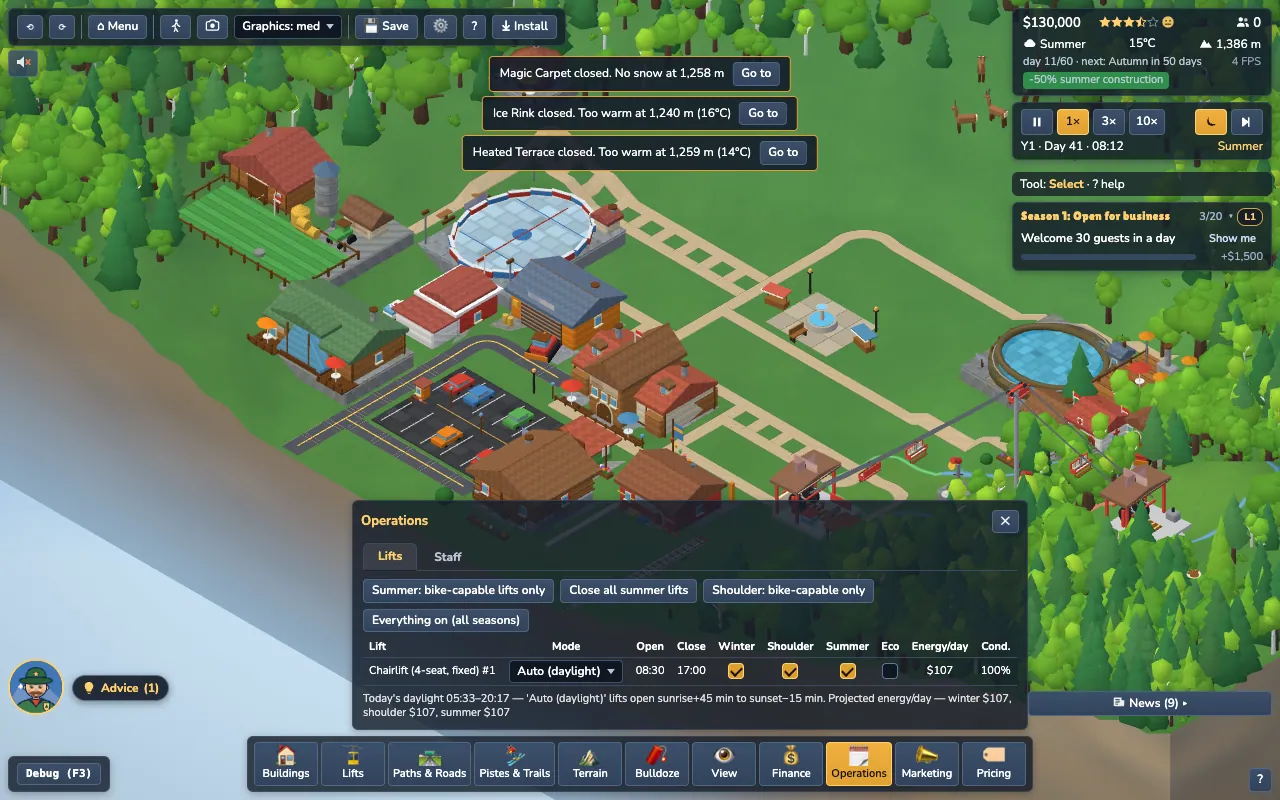
Skiing is fun until somebody falls over. The Operations drawer and the coverage overlays show how well your resort can cope.
#Incidents
Guests can get injured, stuck or buried, or meet a bear. An incident progresses from open to responding, treatment, transport and resolved. Left alone, a minor injury becomes major and then critical, so response time matters.
#Your safety team
- Ski Patrol Hub: sends patrol sleds out onto the pistes (you can add or remove staff, up to six per hub).
- First-Aid Hut: treats minor injuries on site; its medic walks to the guest.
- Helipad: a rescue helicopter flies serious cases to hospital off the edge of the map. It costs more per mission and unlocks at resort level 4 in Career.
- Warning signs reduce storm trouble on the slopes.
Use the coverage overlay (O cycles overlays) to see which pistes are outside patrol and first-aid reach.
#Staff and training
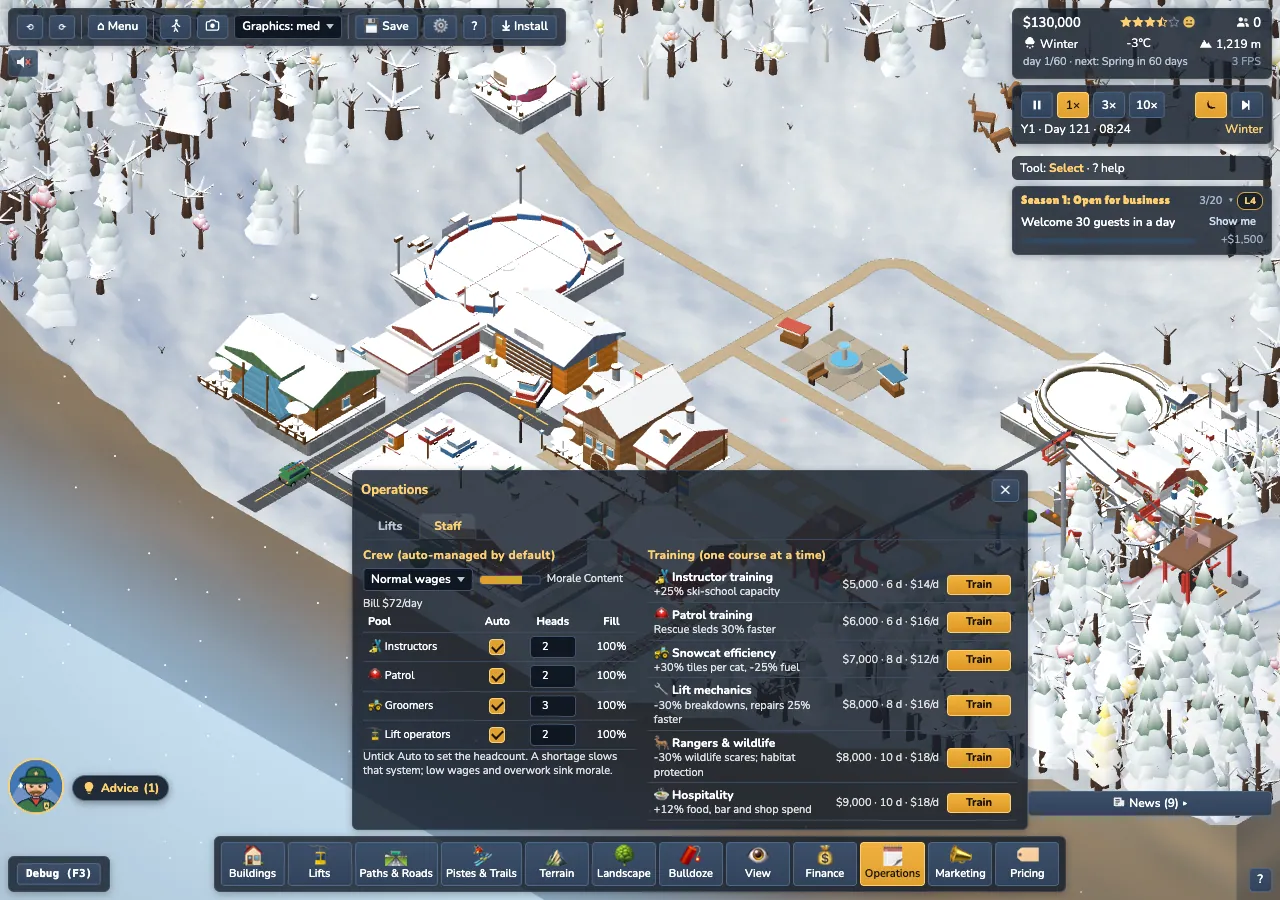
The Staff tab (next to Lifts in the Operations drawer) keeps four crews: instructors (ski-school capacity), patrol (how fast the rescue sleds go), groomers (the night shift) and lift operators (loading speed). By default everything is on Auto: crews match what your buildings need, nothing changes and nothing extra is paid.
Untick Auto to set a headcount yourself. Fewer people than needed slows that job down (never below 30 %), extra people cost wages and bring nothing. The wage level (low, normal, high) scales the bill and sets the crew's morale: tired, underpaid crews break more lifts, happy ones fewer.
#Six training courses
Staff can also take one course at a time. Each costs a one-off sum, takes some days and adds a small daily upkeep once trained. Some need a higher resort level in Career.
| Course | What it does | Cost | Training | Upkeep | Level |
|---|---|---|---|---|---|
| Instructor training | +25% ski-school capacity | $5,000 | 6 days | $14 / day | 1 |
| Patrol training | Rescue sleds 30% faster | $6,000 | 6 days | $16 / day | 1 |
| Snowcat efficiency | +30% tiles per cat, -25% fuel | $7,000 | 8 days | $12 / day | 2 |
| Lift mechanics | -30% breakdowns, repairs 25% faster | $8,000 | 8 days | $16 / day | 2 |
| Rangers & wildlife | -30% wildlife scares; habitat protection | $8,000 | 10 days | $18 / day | 3 |
| Hospitality | +12% food, bar and shop spend | $9,000 | 10 days | $18 / day | 3 |
#Avalanches
Avalanches are rare and dramatic. They need steep ground (roughly 30–45°), plenty of snow and fresh snowfall, and cold air. Forests protect slopes; patrol cover and night control blasting make slides less likely. A slide can bury guests and closes pistes for several hours. Most are small and harmless.
#Wildlife and rangers
Bears sleep through winter, get hungry in autumn and roam the remote forest in the warm months, along with wolves. They scare guests and cost you income.
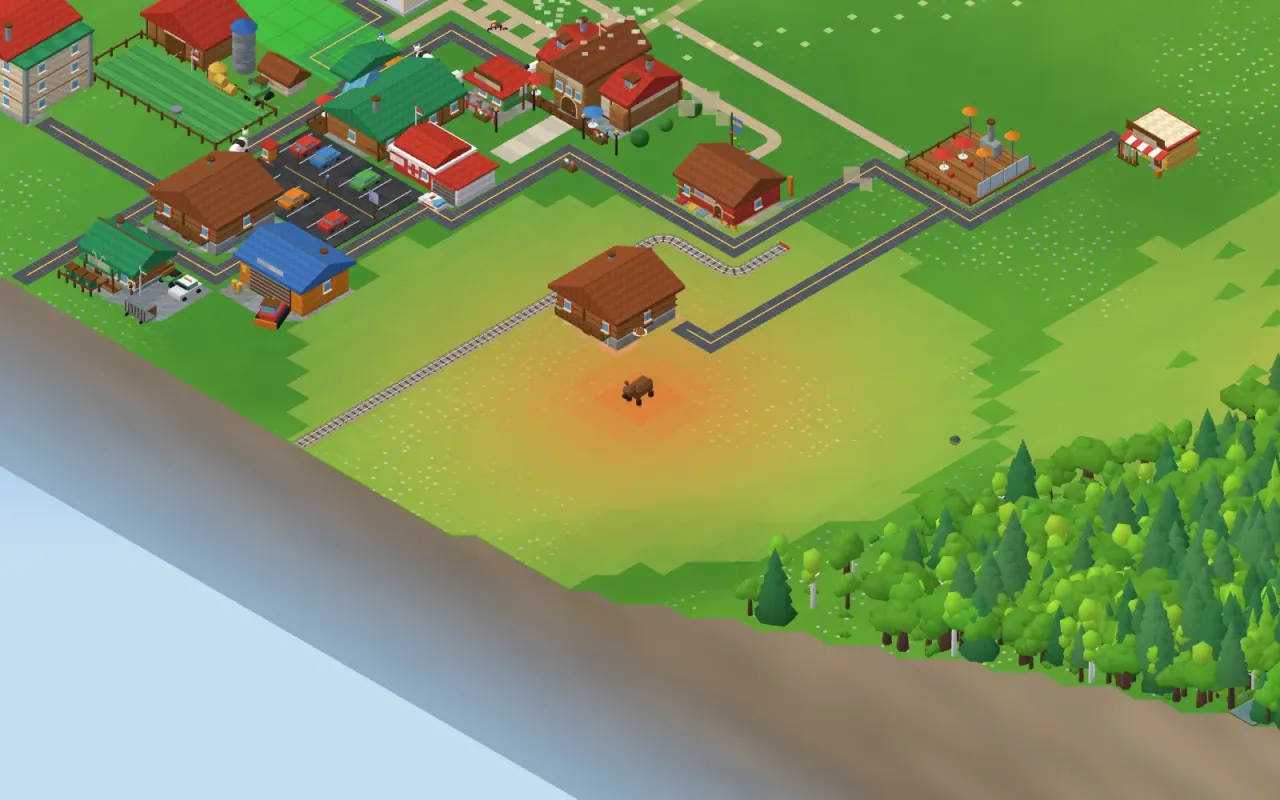
Build a Ranger Station (it unlocks a goal early on) to keep guests and animals apart. Rangers can stock bear-proof bins. The Rangers & wildlife course scares guests less often and halves the habitat penalty in your sustainability score.
#Lifts: maintenance and breakdowns
Lifts wear out. A Lift Maintenance Workshop looks after them. Strong wind closes lifts that are not wind-tolerant, and a stuck lift triggers an evacuation of riders.